
Reliance Group Chairman Anil Ambani on Tuesday appeared before the Enforcement Directorate here for questioning in a money laundering case linked to alleged multiple bank loan fraud cases worth crores of rupees against his group companies, official sources said.

However, the company has not provided a timeline for the launch of the small electric car.

Clearly, some of the bullishness of the early days has gone missing. Ola's market share is slipping amid rising competition from incumbents like Bajaj Auto and TVS.
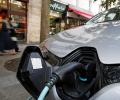
Society of Manufacturers of Electric Vehicle (SMEV) on Thursday said sales of EVs in India fell 20 per cent in the financial year 2020-21 to 236,802 units. In 2019-20 sales of electric vehicles (EVs), including electric two-wheelers (E2W), electric three-wheelers (E3W) and electric four-wheelers (E4W), stood at 295,683 units. For FY21, the E2W segment sales declined by 6 per cent to 143,837 units, as compared to 152,000 units in FY20, SMEV said in a statement, adding that the FY21 E2W sales included 40,836 high-speed and 103,000 low-speed E2W. The E3W segment registered sales of 88,378 units as against 140,683 units sold in FY20.
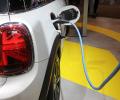
Maruti Suzuki India will launch electric vehicles in the country only after 2025 as demand for such vehicles at the moment is less and it would like to sell around 10,000 units a month whenever it enters the electric mobility space, company chairman RC Bhargava said on Wednesday. Addressing a virtual conference on the company's second quarter earnings, he said under the current circumstances a lot of things in the EV ecosystem such as batteries, charging infrastructure and electric supply are done by other parties and therefore the costing is not in the hands of the company. Also with fuel prices going up, car market leader Maruti Suzuki India is intensifying its focus on more CNG offerings of its models.

The average cost of data breaches in India reached $2.18 million in 2023, marking a 28 per cent increase since 2020, according to the Reserve Bank of India's (RBI) Currency and Finance report for 2023-24. The report said that India's average data breach cost was still below the global average. The most common attacks in India are phishing which was at 22 per cent and stolen or compromised credentials was 16 per cent. The automotive industry is highly vulnerable to cyber attacks, whereas the banking and financial services sector, benefiting from stringent regulations, enjoys comparatively stronger protection.
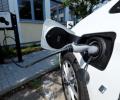
Electric vehicle market is likely to attract investments of Rs 94,000 crore over the next five years and is expected to generate business opportunities in the real estate sector, according to a joint report by Colliers India and Indospace. The report 'Electric Mobility in Full Gear' mentioned that the electric vehicle (EV) industry in India is currently at a nascent stage but it is likely to grow, backed by government initiatives and a move towards recognising climate change. "India is taking a step towards sustainability and has vowed to cut its carbon emissions. "At the recently concluded CoP26 summit, India pledged to reach net-zero carbon emissions by 2070. "In India, the transport sector is currently the third-largest emitter of CO2. This is leading to increased thrust on EVs in India," it said.

Korean automaker Hyundai Motor Group (HMG) is vigorously aiming to establish a robust presence in India's electric vehicle (EV) segment through the introduction of new models and the establishment of charging stations under Hyundai Motor India (HMIL) and Kia India. Euisun Chung, executive chairman of HMG, who is currently visiting India, urged both companies to deliver products that not only meet but exceed customer expectations on time, thus driving the achievement of these growth targets. The group is strategically working to elevate Kia's market share from the current 6.7 per cent to an impressive 10 per cent in India in the near future.

The smartest homes are not the ones that dazzle with tech, but the ones that disappear into your daily life while quietly elevating it.

Some of the key names include: Maruti, M&M, Ashok Leyland, Britannia, Ultratech, JK Cement, Havells, Voltas, Amber, Metro, Trent, LemonTree, Indian Hotels, Niva Bupa, HDFC Life, IGL, Acme Solar, Suzlon, Swiggy, Delhivery, ICICI Bank, HDFC Bank, Bajaj Finance, Shriram Finance," according to a report by Motilal Oswal Financial Services.

'If it is your second car (electric vehicle), you typically keep it for travel within the city.' 'And the first car (internal combustion engine-run vehicles) can then be used to travel to some other cities.'

Tata Motors on Friday reported a 62.2 per cent decline in consolidated net profit to Rs 4,003 crore in the June quarter, impacted by volume decline across segments, drop in JLR profits due to US tariffs and high base effect due to gain from sale of discontinued operations. The auto major had posted a consolidated net profit of Rs 10,587 crore in the April-June quarter of the previous fiscal, Tata Motors Ltd (TML) said in a regulatory filing.

From premium electric motorcycles to mass-market scooters, manufacturers are rapidly expanding their portfolios to capture a larger share of the booming market.

Ather Energy would set up 30 charging points across Bengaluru by the end of May and the number would go up to 60 by the end of the year.
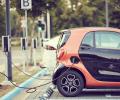
'EV-charging is the next big opportunity after fuelling'

In a boost to the electric vehicle boom in India, Taiwanese major Hon Hai Technology Group (aka Foxconn) is likely to set up an EV manufacturing unit in India through its subsidiary Foxtron. Amid speculation that the company may look at Tamil Nadu and probably the Ford India unit near Chennai for its new facility, sources indicate that the group was already betting big in the electric vehicle component space in India through Bharat FIH, which is already having a tie up with companies like Ola Electric and Ather. Bharat FIH currently has two manufacturing units in Tamil Nadu's Sriperumbudur that manufactures phones like Apple iPhones and Xiaomi phones.

If electric cars with a real range of more than 400 km are launched, the anxiety regarding the charging points will come down, and more people will buy EVs.

The MG ZS EV, to be unveiled next month, will go head to head with Hyundai Kona, launched in July this year as the country's first fully electric SUV.
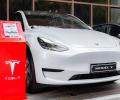
With India's EV penetration at just 2.5 per cent, the market presents an opportunity -- provided Tesla gets its pricing right.

India's planned transition to electric vehicles will drastically affect the commodities market, says Aditya Gandhi

Global supermajor BP Plc's exclusivity with Reliance Industries Ltd has ended but the energy giant will continue to pursue oil and gas as well as mobility ventures in India with the Mukesh Ambani firm owing to an unwritten strategic partnership, BP's outgoing India head Sashi Mukundan said. BP in 2011 spent $7.2 billion to acquire 30 per cent interest in 23 oil and gas blocks of Reliance. Eastern offshore KG-D6 block was the cornerstone of the deal that also provided for a 10-year exclusivity period which meant that BP would take up energy projects or investments in India only in partnership with Reliance.

The aim is to replace nearly 40 per cent of its existing last mile fleet of delivery vans with EVs by March 2020. o start with, the company is looking at deploying nearly 160 e-vans by the end of 2019.

'If you align your ambition with India's rise, the peak of your careers will unfold alongside the peak of India's power.'

India's electric mobility goal, which has so far been riding on two wheels, is all set to graduate to four wheels. At least, the journey has begun. Hyundai Motor India said it would invest Rs 4,000 crore till 2028 to launch half-a-dozen electric vehicles (EVs) in India. It would eventually straddle premium and mass segments. The first of these - the electrified version of an internal combustion engine (ICE)-powered model - will go on sale as early as next year.
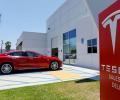
Union Minister Nitin Gadkari on Friday said he has asked US-based Tesla several times to manufacture its iconic electric vehicles in India, while assuring that all support will be provided by the government to the company. Addressing 'India Today Conclave 2021', Gadkari further said electric cars manufactured by Tata Motors are not less good than electric cars manufactured by Tesla. "I have told Tesla that don't sell electric cars in India which your company has manufactured in China.
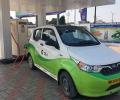
Signals received from the government in the past one year reflect a state of utter confusion, says Abhishek Tripathi.

With rising petrol and diesel prices driving up demand for its CNG vehicles, the country's largest carmaker Maruti Suzuki India plans to widen its CNG portfolio by offering the fuel option in four more models 'very shortly', according to a senior company official. The company, which plans to launch an electric vehicle (EV) in the Indian market by 2025, is also currently keeping a close watch on the country's EV ecosystem "to find out what is the best way of evolution" to be able to offer affordable EVs with hassle free charging infrastructure in order to clock high volumes for a sustainable business.

Amazon
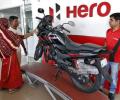
Hero MotoCorp anticipates a big rebound in two-wheeler (2W) sales in rural India over the next four to eight quarters, driven by favourable factors such as a decent monsoon, rising crop prices, improved employment conditions, and increasing consumer confidence, its chief executive officer (CEO) Niranjan Gupta said on Wednesday. Amid tepid rural sales, he stated that there is a "strong case" for GST (goods and services tax) on entry-level two-wheelers, which are under 125 CC, to be moved down from 28 per cent to 18 per cent as they are used by "masses".

The company aims to follow the government's push for environment-friendly vehicles by driving in models with green technologies.

'The scheme excludes tractors, light commercial vehicles, and medium and heavy commercial vehicles.'
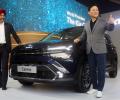
'India is the sixth-largest market for the Kia Corporation, and contributes 8 to 9 per cent to our global sales.' 'We are eyeing 10 per cent market share over the next few years depending on customer demand and new product innovations.'

Recently, Suzuki Motor Corp (SMC) in an investor presentation expressed strong intent to enter the electric vehicle (EV) space. This is part of a larger strategy the Hamamatsu-based firm has drawn up in developing electrification of technologies as it seeks to achieve carbon neutrality. The significance of this presentation is that it marked the first time that the Japanese carmaker spelt out its EV strategy with well-defined timelines. SMC plans to develop electrification technologies by 2025, fully implement them in products from the same year, and make a full-scale quantitative increase from 2030.

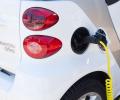
The government has initiated a process to define standards and guidelines for electric charging stations.
'Our strategy is intact and our important pillars for India -- the SUV roll-out and the focus on the cost of ownership of a car -- remain in focus'

Adani group will invest more than $100 billion (around Rs 8,340 crore) in energy transition projects and manufacturing capability to produce every major component required for green energy generation, its chairman said on Wednesday. Besides building solar parks to produce electricity from sunlight and wind farms that do the same from wind, the conglomerate is building major facilities to manufacture electrolyzers for making green hydrogen, wind power turbines and solar panels.

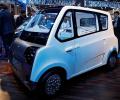
An EV has to be purchased along with the battery as there are hardly any battery swapping, rental, or leasing business models available across India.

'We are very quickly going to announce the timeline of our launches, which should start giving us the turnaround'
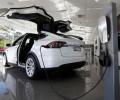
The $306-million investment in Ola Electric Mobility by SoftBank Corp, Arun Sarin Family, Ratan Tata and Matrix has been the biggest funding in this space in value terms this year.
 © 2026 Rediff.com - Advertise with us - Disclaimer - Privacy Policy - Sitemap - Feedback - About us - Terms of use - Grievances